Bardwell Camping Area
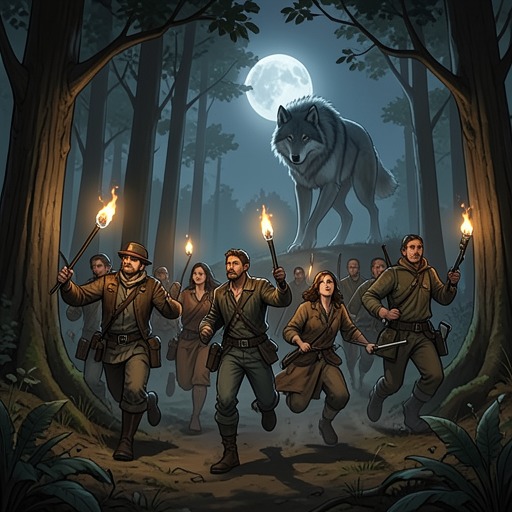
How to Flirt with A Naked WerewolfBardwell Camping Area is presented as a supposedly restorative nature preserve but becomes a charged threshold between domestic intimacy and violent revelation. Cooper Graham takes Mo Duvall-Wenstein there under the guise of a surprise outing, leading her away from the safer conveniences of the campground into a secluded clearing where he can speak about his past, his family, and the werewolf secret. The location’s apparent distance from town gives him privacy, yet the same isolation makes it the setting for a discovery that deepens the danger already pressing around their relationship.
Setting and Departure
Cooper’s surprise begins when he drives Mo to Bardwell Camping Area, a choice that sharply disappoints her expectations of comfort. She had imagined bed-and-breakfasts, spas, and double massage tables; instead, she finds a nature preserve and a heavy green canvas trail pack. Mo objects that camping is not the same as living close to nature and points to the civilized amenities she would prefer, including electrical hookups, picnic areas, grills, and showers. Her resistance also reflects the wider crisis: attacks have been occurring, armed self-appointed birdwatchers are present, and camera crews are active, while Cooper has barely ventured a mile from home for weeks.
The trip nevertheless has a deliberate purpose. Cooper says that there is something he needs to tell Mo and that he cannot say it at home. He wants a place where they can simply pick up and leave the matter behind, framing Bardwell as a temporary refuge from domestic walls, public scrutiny, and the accumulated pressure of the attacks. He carries the gear, gives Mo the backpack, and leads her away from the marked entrance and the orderly RV park rather than toward its facilities. The path therefore moves physically and narratively away from ordinary public space: the farther they go, the more the setting becomes a private enclosure for a secret that has never been shared with another girlfriend.
The Secluded Clearing
The hike is longer and rougher than Mo would willingly choose, but the woods also alter the emotional atmosphere between them. Cooper, worried that he has exceeded her patience, fills the walk with stories about camping with his grandfather, early runs with Samson, local legends, weather, and finally the scientific names of trees. Mo answers his chatter, and the natural setting briefly permits a reciprocal ease that the town’s danger has made difficult. The woods are not merely scenic background; they create enough distance for Cooper to approach a confession while giving both characters room to move beyond the routines and anxieties of the house.
They eventually reach a small clearing flanked by trees. Its hard-packed ground and a stone circle filled with the black remains of burnt branches show that the place has been used repeatedly despite being out of the way. Cooper stacks firewood in the circle, confirming that this is not an accidental stopping point but a site familiar to him. When Mo jokingly asks whether he brings all his girlfriends there, Cooper answers that only those who know about the werewolf matter have been brought to the campsite, and that Mo is the only one. The revelation gives the location an exclusive status: Bardwell is not a casual romantic retreat but a concealed meeting place associated with the disclosure of his identity.
Mo’s surprise at learning that Cooper has told none of his previous girlfriends about the wolf secret underscores the clearing’s role as a threshold in their relationship. Cooper explains that he has not had many girlfriends and has never stayed with one long enough to tell her. The secluded campsite thus marks a change in the degree of trust between them. What appears at first to be an ill-conceived camping trip becomes a controlled movement from concealment toward disclosure, with the fire circle functioning as the physical center of that transition.
A Refuge That Cannot Remain Safe
The clearing’s privacy proves temporary. Although Bardwell Camping Area gives Cooper Graham a place to speak beyond the reach of town, the surrounding woods also expose how little control either character has over the violence gathering around them. The same natural environment that allows Cooper to discuss his family history and the werewolf secret becomes a corridor through which danger enters. The campsite therefore complicates the idea of retreat: leaving the public world does not remove the attacks, the suspicion, or the bodily consequences of the wolf conflict. It merely relocates them into a space that initially appears intimate and protected.
Violence in the Clearing
The campsite’s apparent safety collapses when Cooper, already in wolf form, finds Abner Graham’s body nearby. Abner lies on his back with his pack still strapped across his chest, his loaded rifle unused at his side, and deep claw marks crossing his chest dangerously close to his neck; additional slashing wounds have darkened and dried on his trousers. Cooper’s bristled fur and circling vigilance make the surrounding trees feel less like shelter than a concealed perimeter. Bardwell thus becomes the place where the private revelation of Cooper’s identity is overtaken by public violence: the clearing links his werewolf nature not only to intimacy and inherited secrecy but also to the unexplained attacks threatening Grundy. Mo’s attempt to provide first aid, despite her shock and shame at recoiling from the wounds, turns the campsite into an improvised emergency scene. Its remoteness delays ordinary help, while the familiar stone circle and forest path acquire a grim new meaning as the setting of a mauling.
Narrative Significance
Bardwell Camping Area concentrates the novel’s movement from private trust toward unavoidable consequence. Cooper chooses the preserve because domestic space can no longer contain what he must disclose, and the secluded clearing briefly makes confession seem manageable: he can speak of the werewolf secret, his family, and the history he has withheld while remaining free to leave with Mo. Yet the location refuses to function as a simple sanctuary. Its distance from town cannot insulate the couple from the violence surrounding Grundy, and the discovery of Abner Graham’s mauled body converts the campsite from a site of selective intimacy into evidence that the threat has entered their shared world. The setting also intensifies Cooper’s uncertainty about responsibility. Because he cannot remember the night of the attack and believes he might have left the sleeping bag, phased, and reached Abner without waking Mo, the woods become a place where memory, identity, and danger overlap. That uncertainty later shadows Mo’s discovery that she may be carrying a werewolf child, while Cooper’s return to her and decision to mark her as his lifelong mate transform the relationship first tested at Bardwell into a family bond. The campsite therefore remains significant not because it offers lasting escape, but because it exposes the limits of escape: what begins as a secluded conversation becomes the setting in which love, inherited violence, bodily change, and the need for accountability can no longer be kept apart.